
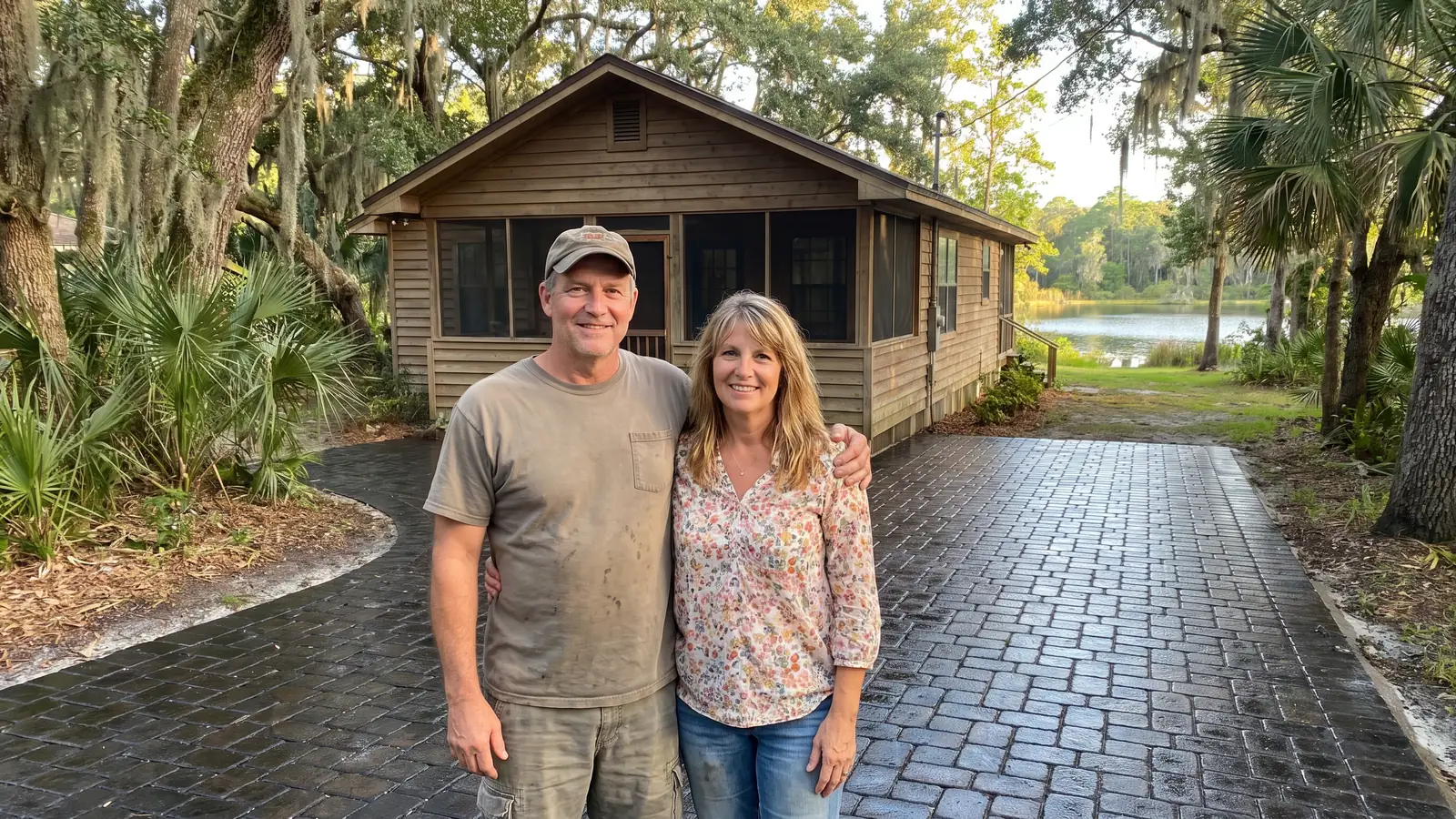
Paver sealing for Fruit Cove homes
Paver Sealing in Fruit Cove, FL
Fruit Cove pavers sit near the river and the Bartram Scenic Highway, so call (904) 736-3472 for a free sealing estimate.
- Brings out deeper paver color
- Fresh joint sand helps lock pavers in place
- Gives weeds less room to grow
- Makes the surface easier to keep clean
- Free estimate, no obligation
Request a Free Estimate
Free, no obligation.
Fast, careful paver sealing in Fruit Cove
Paver sealing in Fruit Cove begins with a free estimate from a local contractor who cleans, re-sands and seals. Driveways, pool decks and walkways from the river bluffs to Julington Creek are all fair game. Call (904) 736-3472 and you will get an answer within 1 business day, often within hours.
Think of the walkway you cross every morning. Oak leaves have stained it brown, a green film clings where the sprinkler lands, and the joints are thin. A wash, fresh sand and a protective coat leave it looking even and clean. To ask about yours, ask for your free estimate and tell the contractor which street you are on.
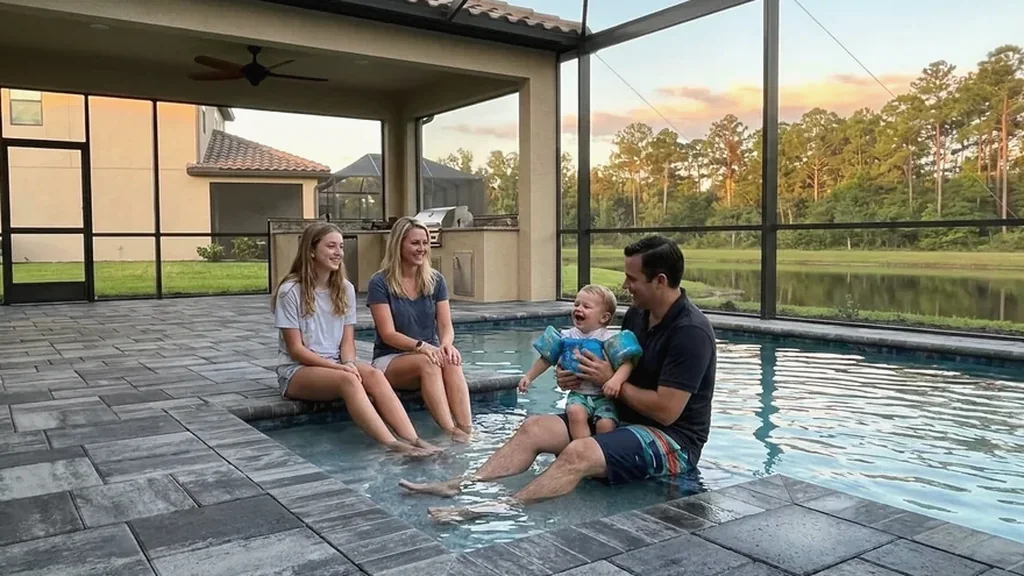
Why hire a local paver sealing contractor in Fruit Cove?
Fruit Cove has oaks, river air and sprinklers on almost every lot, and each one leaves its own mark on pavers. A local contractor has seen all three, so ask for your free estimate and ask how they apply to your yard.
Free and in writing
The contractor measures your Fruit Cove pavers and writes up a free estimate. You decide afterward. A written quote follows.
A fair range to hold up
Companies commonly publish $1.75 to $3.25 per square foot to clean, sand and seal. Compare any Fruit Cove bid to it.
Two coats are common
One paver company serving this area applies two coats as standard. Ask how many your estimate includes.
You pick the look
Matte, satin or wet look, with grip for pool decks. You choose the finish before work starts.
Get Your Free Estimate in Fruit Cove
Tell us about your pavers in Fruit Cove.
Free, no obligation
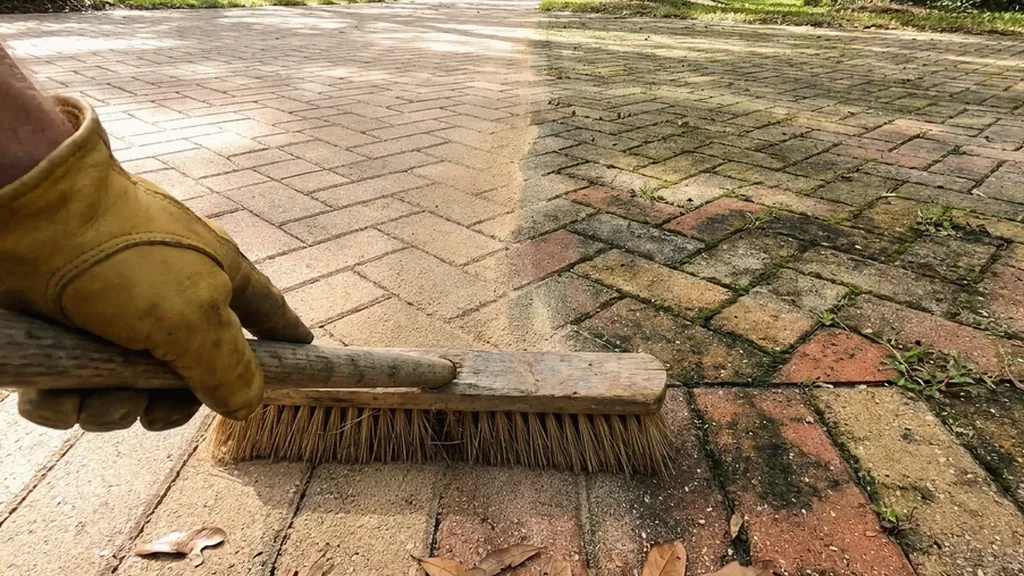
What paver problems show up most in Fruit Cove?
Oak tannin and acorn stains
Beluthahatchee Park, off State Road 13, is shaded by live oak, laurel oak and water oak. UF/IFAS says water oak acorns stain concrete where they fall and that live oaks can spread 60 to 120 feet. Laurel oak leaves hold on until early spring, so leaves keep dropping for months. Tannin from those leaves soaks into unsealed pavers and can stay for good. If one strip of your driveway is darker than the rest, check the branches above it. A contractor will treat that strip before sealing so the stain is not locked under the coat. Ask which stains on the drive should fade and which may stay a little visible. A Bartram highway guide describes oak hammocks and moss-draped trees along State Road 13, a fair picture of the shade in Fruit Cove.
Black mildew in shade and sprinkler spray
A Jacksonville company notes that pavers in shade or in a sprinkler's path grow black mildew quickly. Green algae grows wherever shade and moisture meet, such as under trees or patio roofs. The St. Johns soil series, first described in this county, is poorly drained and can hold water close to the surface for months. That means lawns and side yards stay damp, and so do the pavers beside them. On a side yard that never gets full sun, expect green and black growth to return sooner. Cleaning and sealing slow it down, and a trim of low branches helps the pavers dry. Beluthahatchee's 18-acre lake was made by damming Mill Creek in 1945, a reminder of how much water moves through Fruit Cove.
Joint sand lost to storms and sprinklers
A paver company that works ZIP 32259 says sandy soil, heavy summer rain and full sun wash out joint sand and soften the base over a few years. Another notes that many local installs used play sand that afternoon storms wash away. Empty joints invite weeds and ants. A low spot at the driveway apron means the base is washing out and keeps getting worse. If the joints sit lower than the paver edges, the sand has been going for a while. Refilling them and sealing afterward gives the surface a firm, even edge again. The same pattern shows up along walkway edges where sprinklers soak the ground. Fruit Cove's population grew from 5,904 in 1990 to 32,143 in 2020, so most of its pavers went in during those three decades.
Fading on homes from the 1970s through the 1990s
NeighborhoodScout counts 83.6 percent of Fruit Cove homes as built from 1970 through 1999. Fruit Cove Estates dates to 1991. Pavers added to homes that age may have seen decades of sun and rain, and some have lost their smooth top layer. A fresh coat after a deep cleaning brings the color back and slows more wear. Sun and pool chemicals also fade color unevenly, so patios can look patchy next to shaded walks. Sealing evens out the finish and protects what color remains. Ask the contractor which coat count suits the age of your pavers. Neighborhood guides describe Fruit Cove Estates with spacious homes and large yards, and larger yards often mean longer drives.
Rust from sprinkler heads
UF/IFAS reports that most Florida well water is high in iron, and that irrigating with it leaves orange stains. Walk along your driveway edge and look for rust-colored fans where spray lands. Those marks need treatment first, since a coat would trap them. Turning the heads toward the lawn keeps new stains from forming. A well that feeds your irrigation can stain a driveway, a pool deck and even the house wall. The contractor can treat the pavers, but the fix for the source is a spray adjustment. Ask for rust treatment to be part of the estimate. The river sits close, at Alpine Groves Park's dock and along the Bartram highway.
Do Fruit Cove Estates and Durbin Crossing need different sealing plans?
Often yes, because they were built about fifteen years apart. Fruit Cove Estates dates to 1991, with homes built between 1990 and 2004 and a reputation for large yards. Durbin Crossing went up mostly from the mid-2000s into the 2010s and has two amenity centers with pools. Tell the contractor your neighborhood when you ask for your free estimate.
Julington Creek Plantation, across Race Track Road, covers roughly 4,100 acres with about 45 neighborhoods built from the 1990s on. Cunningham Creek is also listed among Fruit Cove neighborhoods. Older sections may need a full restoration, while newer ones may need a first coat after the right wait. Call (904) 736-3472 and tell the contractor the year your home went up.
Most of these communities have an association. Florida Statute 720.3035 lets a board require owners to follow an existing building scheme for exterior appearance, but only as far as the documents say. A natural-look finish is the safer choice if you are unsure. Check your rules, then ask for your free estimate and ask about options.
What does paver sealing cost in Fruit Cove?
Prices posted by companies in this area start at $1.75 per square foot and reach $3.25 to clean, sand and seal. Safe Touch lists Fruit Cove among its areas. Oak stains, black mildew and failed old sealer push a job toward the top of that range. To price your own pavers, ask for your free estimate for a free estimate.
Extras change the number. One paver company serving this area applies two coats as standard, and three on brick that was never sealed, so ask how many coats a bid includes. A cost guide adds that whole-yard packages price better per square foot than one patio. Call (904) 736-3472 and ask for each coat to be listed.
| Paved area | Typical example | Clean, sand and seal |
|---|---|---|
| 300 sq ft | Small patio or walkway | $525 to $975 |
| 600 sq ft | Two car driveway | $1,050 to $1,950 |
| 1,000 sq ft | Large driveway or pool deck | $1,750 to $3,250 |
| 1,500 sq ft | Driveway plus pool deck | $2,625 to $4,875 |
Math based on the $1.75 to $3.25 per square foot that Northeast Florida paver companies publish. Your contractor sets the actual price after seeing the surface. Repairs, leveling and stripping failed sealer are usually extra.
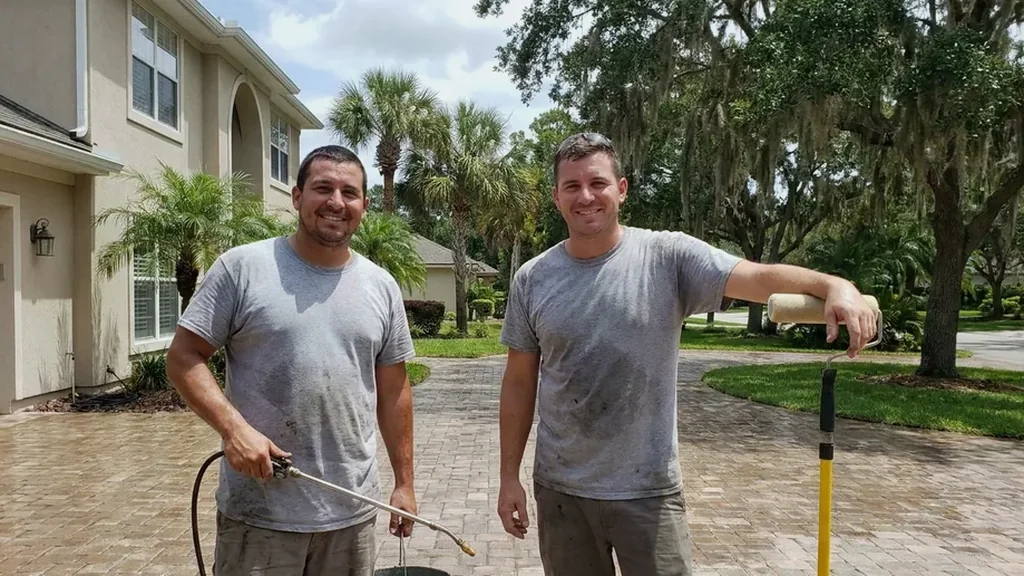
How does a paver sealing job work in Fruit Cove?
Walk the yard under the trees
The contractor starts under the oaks, noting where leaves drop, where sprinklers spray and where rain pools. Low aprons and lifted corners are marked, because a coat does not fix sinking pavers. Any old sealer is identified first, and stains are listed. Julington Creek Plantation's roughly 4,100 acres were built from the 1990s on, so a walk along the street often shows several paver ages.
Lift tannin, mildew and algae
The wash pulls black mildew, green film and leaf stains from the surface and the joints. Pressure is chosen to protect the paver. Near a pool the rinse goes elsewhere, and oil and rust spots get a pre-treatment that may only lighten them. Laurel oak leaves fall in early spring, so a late-winter wash can be followed by a second round of leaf stains.
Pack in real paver sand
Washing empties the joints, so they are refilled before any sealer. Paver sand packs down firm, where play sand tends to wash away. A swept surface comes next, and full joints help the pavers shed water and block weeds.
Let the yard dry out
A manufacturer bulletin wants 24 hours of dry time after washing or rain. Shaded side yards under the oaks dry slowest. New pavers wait 60 to 90 days, or longer, so moisture and white mineral haze can leave.
Coats, cure and a quiet 48 hours
The sealer goes on in your chosen finish, sprayed and then rolled. One local company applies two coats as standard and three on unsealed brick. Cars stay off 24 to 48 hours while it cures, and two to five years is the span companies quote before the next coat.
Complete paver services in Fruit Cove
In Fruit Cove, the work starts at ground level and ends with a coat. First the oaks' leaf stains and the sprinkler mildew come off, then new sand goes in, then the pavers dry, then the sealer goes on. Bigger yards may take more than one day. To ask how yours would go, call (904) 736-3472.
Acorns fall on driveways, shade keeps walkways damp, and chlorine and sunscreen coat pool decks, so each surface gets its own care. The contractor keeps rinse water out of the pool, aims spray away from plants and pre-treats stubborn spots. Tell the contractor what you have when you ask for your free estimate.
A film sealer sits on top and can look matte, satin or wet. A penetrating sealer soaks in and leaves the pavers looking much as they did. Pool decks usually get a grippy finish. For help picking one for your Fruit Cove home, call (904) 736-3472.
Fall gets popular with Fruit Cove homeowners because it is drier and a coat cures steadily. Summer storms push dates around, and spring pollen and leaf drop add cleaning time. New pavers keep their own waiting period. To choose a date for your yard, ask for your free estimate.
Questions to ask before you hire
- Can you bring back color to pavers that have faded to gray?
- What do you do if rain is forecast for the day you are booked?
- Does sandy soil change how you prepare my pavers?
- Is the pressure you use safe for pavers that were laid many years ago?
- Will you re-level any pavers that have sunk before the sealer goes on?
- What happens to the weeds and moss growing in my paver joints before you seal?
- Who do I call if the finish looks cloudy or uneven after the job?
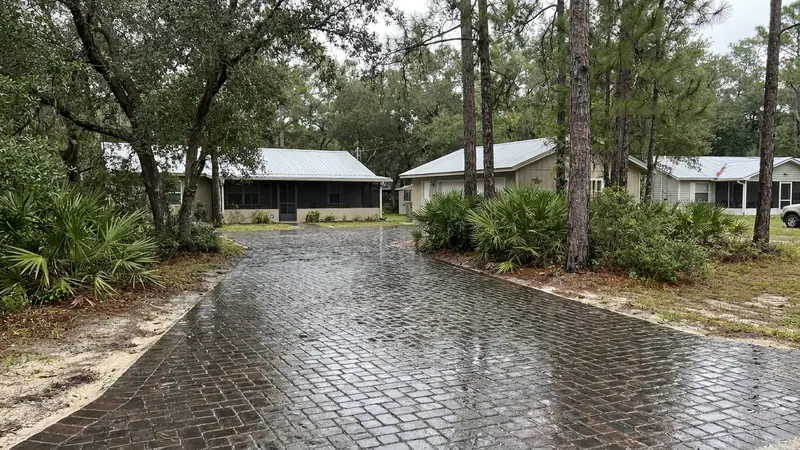
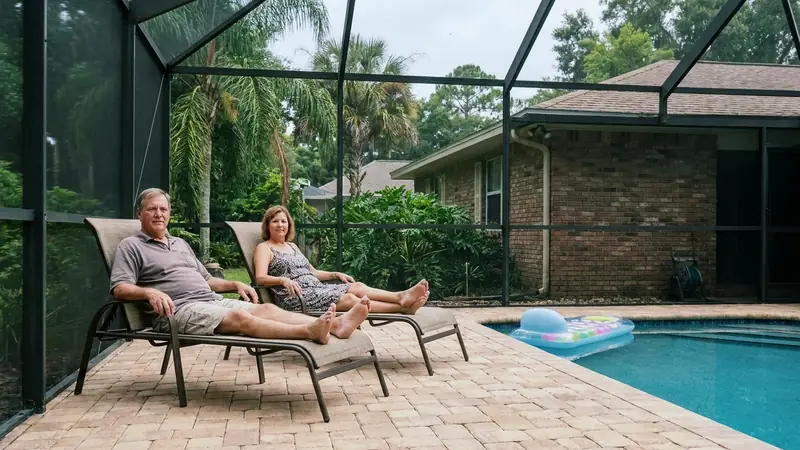
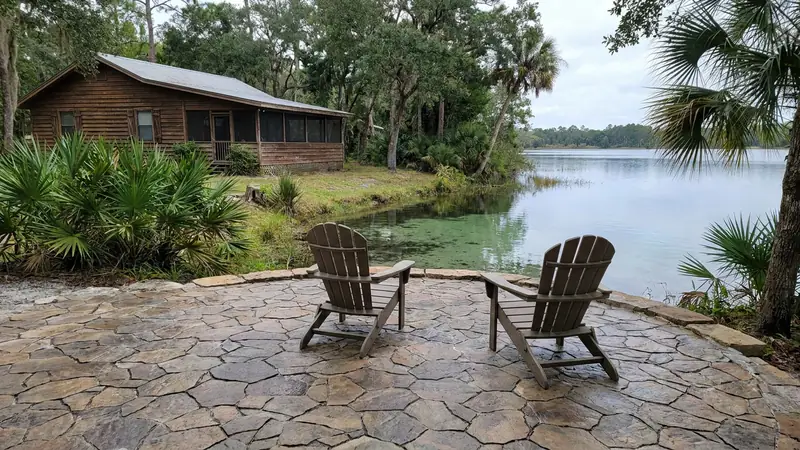
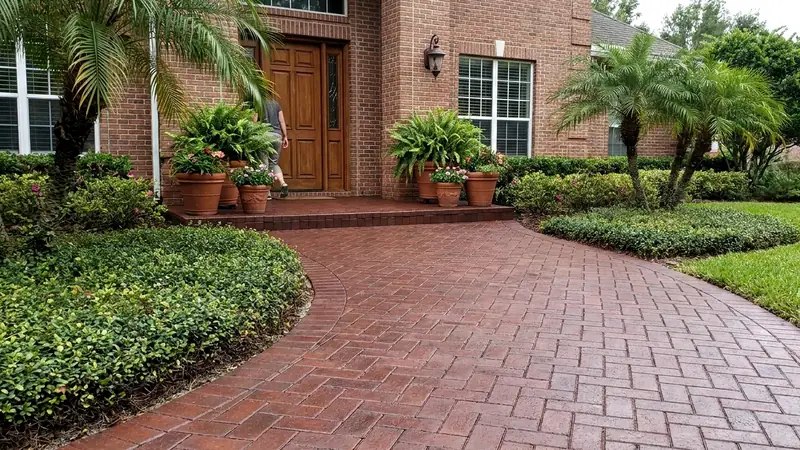
What do sealed pavers look like around Fruit Cove?
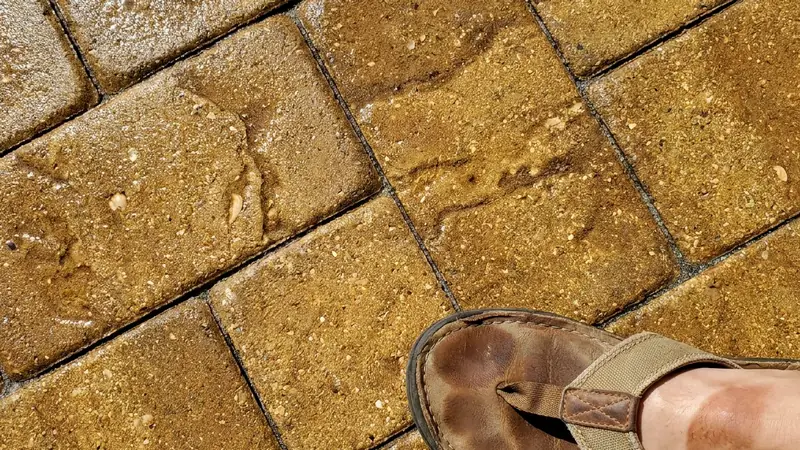
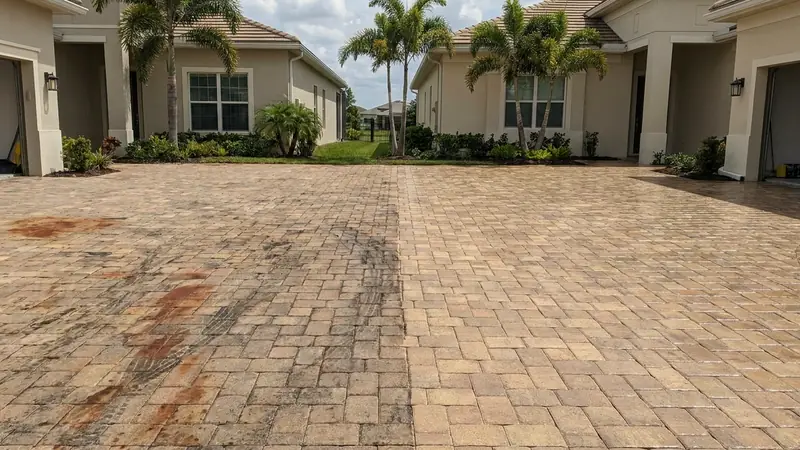
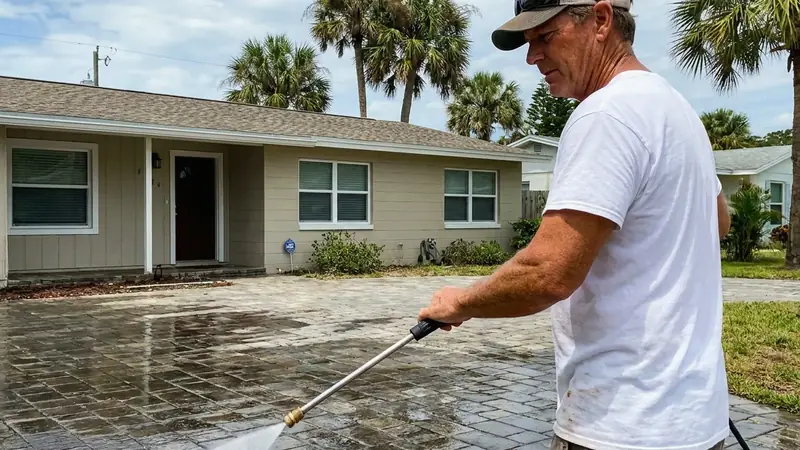
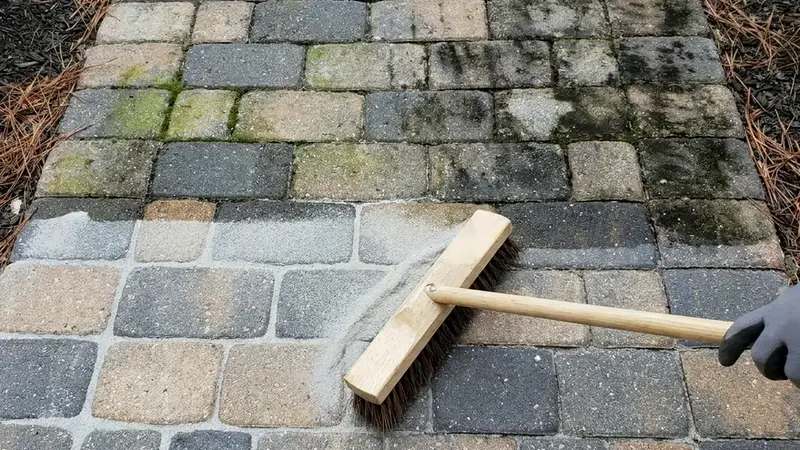
Why local matters in Fruit Cove
A contractor who works Fruit Cove understands that the oaks here are old and wide, and that tannin comes with them. That changes how long the wash takes and which strips get extra care. Someone from a drier, sunnier area may not plan for it. To reach a contractor in this part of St. Johns County, call (904) 736-3472.
Local contractors also know the neighborhoods. Fruit Cove Estates, Cunningham Creek and Durbin Crossing each have their own ages and association rules. A contractor used to them knows when to suggest a quick check with the board. If your street sounds like that, ask for your free estimate and say which one.
Weather planning is the third piece. Summer rain arrives fast near the river, and damp ground keeps pavers wet. A local contractor builds a dry window around the job. Ask about it when you call (904) 736-3472.
What is the story behind the name Fruit Cove?
It comes from the orange groves that once covered the riverbank. Settlers grew oranges here in the late 1700s, the Moremen family later made Fruit Cove a citrus shipping hub, and African-American settlers built the historic A.M.E. church in 1870. If you live near the river bluffs and your walkway needs help, ask for your free estimate.
The Bartram Scenic Highway, State Road 13, runs through it under moss-draped oaks. Alpine Groves Park, an old orange plantation of 54.5 acres, has a river dock and a fishing pier. Beluthahatchee Park has an 18-acre lake made from Mill Creek in 1945. Near any of these Fruit Cove places, call (904) 736-3472 and name your street.
Frequently Asked Questions
Is it good to seal pavers in Florida, and in Fruit Cove?
Yes, for most homes. Sealing holds joint sand, slows weeds and keeps oil and tannin from soaking in. With oaks, sprinklers and heavy summer rain all common in Fruit Cove, a sealed surface rinses cleaner and ages better. A simple bead test shows how the coat is holding up. It also makes the next cleaning easier. Fruit Cove Estates and Durbin Crossing both fall in that range, since quotes follow area and condition, not the subdivision.
How much does it cost to have pavers cleaned and sealed in Fruit Cove?
Figure $1.75 to $3.25 per square foot to clean, sand and seal, the published range for this region. Heavy stains and failed old sealer push toward the top. A full yard package can price better per square foot. Asking for the total square footage in writing makes quotes easy to compare. Oak shade is the main Fruit Cove reason.
Why is paver sealing so expensive?
Prep is most of the work. Cleaning, re-sanding and drying come before the first coat, and many companies apply two coats. Small jobs cost more per square foot because that prep does not shrink with the area. A second coat adds cost but adds protection too.
Is there a pressure washing business in Florida that also seals pavers?
Yes. Many pressure washing companies also clean, sand and seal pavers. Ask whether the cleaning pressure is matched to your pavers, whether joints are refilled, and how many coats the estimate includes. Ask whether the estimate includes joint sand and how the old coat will be handled.
How long should I wait to seal new pavers in Fruit Cove?
Wait about 60 to 90 days, and longer if white mineral haze is still showing. That gives moisture time to leave. Unilock says it is best to wait 2 to 3 months, or even up to a year. A contractor can tell you when your pavers are ready after a look at the surface. Before the first coat, new pavers need clean joints and fresh sand. Fruit Cove's newer streets, including Durbin Crossing, are the likeliest to have pavers in this window.
Will sealing stop oak tannin stains on my Fruit Cove driveway?
It helps. Tannin and oil soak into unsealed pavers, while a sealed surface tends to rinse off. Old stains that have soaked in for years may only fade, so ask what to expect on your drive. Heavy staining may take more than one visit to fade.
How long do I stay off pavers after sealing?
Plan on 24 to 48 hours before driving on a fresh coat, and a few hours before walking. The contractor will give an exact time for the product used. Keep sprinklers off for that period. Ask for the exact time when you book the date.
Can sealing fix sunken pavers near the driveway apron?
No. Sinking or heaving pavers are not something a sealer can repair. A low spot at the apron usually means the base is washing out, so the pavers are reset on a rebuilt base before sealing. Ask for the base repair to be a separate line in the estimate. Rebuilding the base holds up better than a quick patch.
Ready for a Free Estimate in Fruit Cove?
Call (904) 736-3472 and tell us about your pavers.
Free, no obligation